
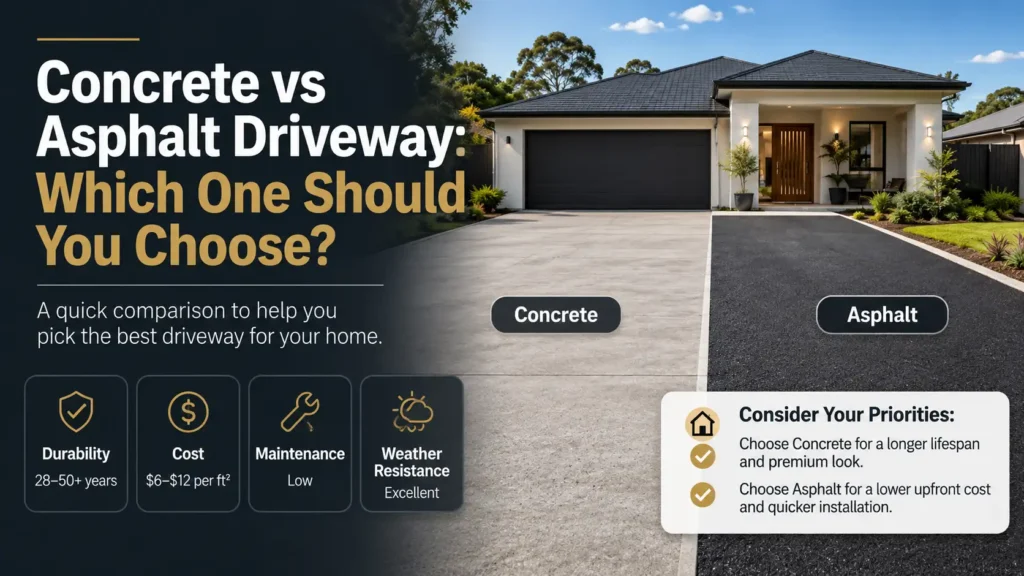
Choosing the right driveway is an important decision for any property owner. Your driveway should look good, handle daily traffic, and last for many years. Two of the most popular options in Australia are concrete and asphalt. While both are reliable materials, they have different strengths, costs, and maintenance needs.
If you’re planning a new driveway or replacing an old one, understanding the differences between concrete and asphalt can help you make the right choice. This guide explains how each material performs, what it costs, how long it lasts, and which option is better for homes and businesses in Perth and across Western Australia.
What Is a Concrete Driveway?
A concrete driveway is made by mixing cement, sand, gravel, and water. The mixture is poured onto a prepared base and left to cure until it becomes strong and durable.
Concrete driveways are common in residential areas because they offer a clean appearance and can be customised with different finishes, colours, and patterns. Decorative options such as exposed aggregate and coloured concrete are also popular for modern homes.
Benefits of Concrete Driveways
- Long service life
- Attractive appearance
- Wide range of decorative finishes
- Suitable for heavy vehicles
- Resistant to oil and fuel when properly sealed
Drawbacks of Concrete Driveways
- Higher installation cost
- Longer curing time before use
- Repairs are often more visible
- Can crack if the ground moves
What Is an Asphalt Driveway?
Asphalt is an excellent choice for homeowners looking for an affordable, long-lasting surface. Learn more about our asphalt driveway installation services to see how we can build a driveway that suits your property.
Benefits of Asphalt Driveways
- Lower installation cost
- Faster installation
- Smooth driving surface
- Easier to repair
- Flexible material that handles minor ground movement well
Drawbacks of Asphalt Driveways
- Needs periodic sealing
- Can soften during very hot weather
- Dark colour absorbs heat
- May require resurfacing after many years
Concrete vs Asphalt Driveway Comparison
| Feature | Concrete | Asphalt |
| Installation Cost | Higher | Lower |
| Installation Time | 5–7 days including curing | Usually 1–2 days |
| Lifespan | 30–40 years | 20–30 years |
| Maintenance | Low | Moderate |
| Repairs | More noticeable | Easier and less visible |
| Appearance | Decorative finishes available | Smooth black finish |
| Heat Resistance | Better surface temperature | Can soften in extreme heat |
| Flexibility | Less flexible | More flexible |
| Driving Comfort | Good | Excellent |
| Best For | Premium homes | Residential and commercial properties |
Which Driveway Costs Less?
For many homeowners, cost is one of the first things they consider.
In most cases, asphalt driveways have a lower upfront installation cost than concrete driveways. This makes asphalt an excellent option for larger driveways or properties with long access roads.
The total project cost depends on several factors, including:
- Driveway size
- Existing surface removal
- Excavation work
- Drainage requirements
- Base preparation
- Thickness of the pavement
- Site accessibility
Although concrete usually costs more to install, some property owners choose it because of its decorative finishes and longer lifespan.
Which Driveway Lasts Longer?
Both materials can provide decades of service when installed correctly.
Concrete
A professionally installed concrete driveway can last between 30 and 40 years with regular maintenance.
Its lifespan depends on:
- Quality of construction
- Proper reinforcement
- Ground stability
- Weather conditions
- Regular sealing
Asphalt
A quality asphalt driveway generally lasts between 20 and 30 years.
Routine maintenance such as crack repairs and seal coating can help extend its life.
Installation ProcessConcrete Driveway Installation
The installation process generally includes:
- Site preparation
- Excavation
- Road base installation
- Reinforcement placement
- Concrete pouring
- Surface finishing
- Curing
Concrete usually needs several days before vehicles can drive on it.
Asphalt Driveway Installation
The asphalt installation process includes:
- Excavation
- Base preparation
- Applying hot asphalt
- Machine compaction
- Surface finishing
Most asphalt driveways can be used much sooner than concrete, making them a practical option for busy households.
Maintenance Requirements
No driveway is completely maintenance-free. Regular care helps maximise its lifespan.
Concrete Maintenance
Concrete driveways benefit from:
- Cleaning dirt and leaves
- Sealing every few years
- Repairing cracks early
- Removing oil stains promptly
Asphalt Maintenance
Asphalt driveways should be maintained by:
- Filling cracks before they grow
- Seal coating when needed
- Repairing potholes early
- Keeping edges protected
- Cleaning debris regularly
Routine maintenance helps prevent water from damaging the pavement structure.
Which Driveway Performs Better in Perth’s Climate?
Western Australia experiences hot summers, seasonal rainfall, and strong UV exposure.
Concrete
Concrete performs well in hot weather but may develop cracks if the ground expands or contracts significantly.
Asphalt
Modern asphalt mixes are designed to handle Australian weather. Asphalt’s flexibility helps reduce cracking caused by minor ground movement.
Professional installation with the correct pavement thickness is important regardless of the material you choose.
Appearance and Design Options
If appearance is your main priority, concrete offers more decorative choices.
Popular finishes include:
- Plain concrete
- Coloured concrete
- Exposed aggregate
- Stamped concrete
- Textured finishes
Asphalt has a clean, modern black finish that suits many residential and commercial properties.
Fresh asphalt also creates strong visual contrast with landscaping and gardens.
Which Is Better for Heavy Vehicles?
If your driveway regularly supports:
- Delivery trucks
- Caravans
- Boats
- Heavy utes
- Commercial vehicles
The pavement should be designed with the correct base and thickness.
Both asphalt and concrete can support heavy traffic when engineered correctly. The foundation beneath the surface often has a greater impact on durability than the surface material itself.
Environmental Considerations
Many property owners are interested in environmentally responsible construction materials.
Asphalt
Asphalt is one of the most recycled paving materials in the world. Existing asphalt can often be removed, processed, and reused in future paving projects.
Concrete
Concrete is durable and long-lasting, although recycling options vary depending on the project and location.
Choosing a professionally built driveway that lasts for many years also reduces unnecessary material waste.
Which Driveway Is Right for You?
There is no single answer because every property has different needs.
Choose Asphalt If You Want
- Lower installation costs
- Faster project completion
- Easy repairs
- Smooth driving surface
- Long residential driveways
- Commercial access roads
Choose Concrete If You Want
- Decorative finishes
- Premium appearance
- Longer lifespan
- Custom colours
- High-end residential design
A professional site inspection can help determine which material is best for your property.
Why Choose Asphalt & Bitumen Civils?
At Asphalt & Bitumen Civils, we deliver professional asphalt paving solutions for residential, commercial, and civil projects. As an experienced asphalt contractor in Perth, we focus on quality workmanship, reliable service, and long-lasting pavement solutions.
Our services include:
- Asphalt driveways
- Road construction
- Car parks
- Bitumen spray seal
- Asphalt resurfacing
- Asphalt repairs
- Commercial paving
- Civil works
Every project is completed using quality materials and industry-approved construction methods.
Frequently Asked QuestionsIs asphalt cheaper than concrete?
In most situations, asphalt has a lower installation cost than concrete.
Which driveway lasts longer?
Concrete generally lasts longer, while asphalt offers easier maintenance and repairs.
Does asphalt crack?
Yes. Over time, asphalt can develop cracks, but they are usually easier to repair than concrete cracks.
Can concrete crack?
Yes. Ground movement, heavy loads, or temperature changes can cause cracking.
Which driveway is better for Perth homes?
Both materials perform well when installed correctly. The best choice depends on your budget, appearance preferences, traffic levels, and maintenance expectations.
Is asphalt suitable for residential driveways?
Yes. Asphalt is one of the most common driveway materials used throughout Australia.
How often should asphalt be sealed?
The timing depends on traffic and weather exposure, but regular inspections help identify when sealing is needed.
Can an old asphalt driveway be resurfaced?
Yes. If the base remains in good condition, resurfacing can restore the appearance and extend the driveway’s service life.
Does concrete require sealing?
Sealing helps protect concrete from stains, moisture, and weather damage, especially decorative finishes.
Should I hire a professional contractor?
Professional installation helps ensure the correct base preparation, drainage, and pavement thickness, all of which have a major impact on the lifespan of your driveway.
Final Thoughts
Both concrete and asphalt are reliable driveway materials, and each has its own advantages. Asphalt is often the preferred choice for homeowners looking for a cost-effective, smooth, and easy-to-maintain surface, while concrete is ideal for those who value decorative finishes and a longer service life.
The best option depends on your property’s needs, your budget, and how the driveway will be used. Before making a decision, speak with an experienced paving contractor who can assess your site and recommend the most suitable solution for long-term performance.