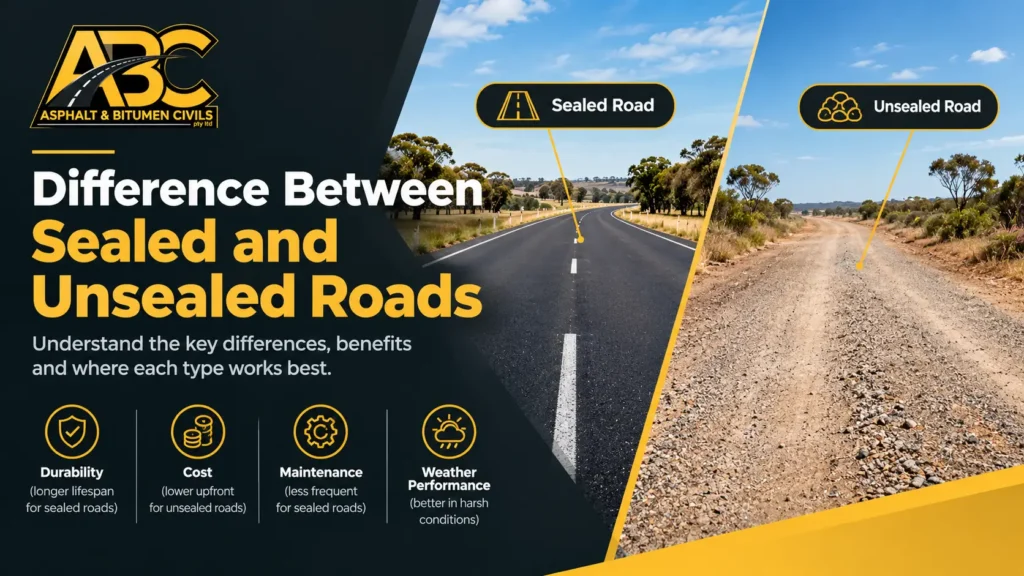
Not all roads are built the same. Some have a smooth, hard surface that makes driving comfortable, while others are made from gravel, dirt, or other loose materials. These are commonly known as sealed and unsealed roads.
Understanding the difference between sealed and unsealed roads is especially important in Australia, where roads can range from busy urban streets to remote rural and outback routes. The type of road can affect driving comfort, vehicle choice, maintenance, and safety.
What Does Sealed Road Mean?
A sealed road has a hard, durable surface made from materials such as asphalt, bitumen, or concrete. These roads are common in cities, suburbs, highways, and other areas with regular traffic. Asphalt roads are particularly common because they provide a smooth and durable surface for vehicles.
Sealed roads are commonly found in cities, suburbs, highways, and other areas with regular vehicle use. They are designed to provide reliable access and generally offer better driving conditions than unsealed roads.
Depending on the material and construction method, sealed roads can provide a long-lasting surface when properly maintained.
What Is an Unsealed Road?
An unsealed road is a formed road that does not have a hard asphalt, bitumen, or concrete surface. Instead, it may be constructed from materials such as gravel, compacted soil, dirt, clay, or sand.
Unsealed roads are common in rural, agricultural, mining, forestry, and remote areas. They can provide an affordable and practical way to connect locations where a sealed road may not be necessary or cost-effective.
However, their condition can change considerably with weather and traffic. Heavy rain can create mud, while dry conditions can produce dust and loose gravel.
Sealed and Unsealed Roads: Key Differences
The main difference between sealed and unsealed road surfaces is how they are constructed and how they perform under traffic and weather conditions.
Surface and Construction
The surface of a sealed road is carefully prepared before the final layer is added. Asphalt paving is one of the most common methods, using layers of prepared material to create a stable surface that can handle regular traffic.
Unsealed roads use loose or compacted materials such as gravel, dirt, or sand. Their surface can be uneven and may develop potholes, ruts, corrugations, or loose sections over time.
Cost, Durability, and Maintenance
Building a sealed road generally requires more materials, preparation, equipment, and construction work. However, the finished surface can provide good durability when correctly designed and maintained.
Unsealed roads can be less expensive to construct, particularly in remote areas. They usually require more frequent maintenance, such as grading, reshaping, filling potholes, and replacing lost gravel.
The actual cost and maintenance requirements depend on factors such as traffic volume, climate, road design, materials, and location.
Driving Comfort and Safety
Sealed roads generally provide a smoother driving experience. Vehicles can travel more comfortably, and there is usually less loose material on the surface.
Unsealed roads can be bumpier and require greater attention from drivers. Loose gravel can reduce traction and may be thrown by passing vehicles. Dust can also reduce visibility, particularly when several vehicles are travelling on the same road.
Drivers should adjust their speed and driving style to suit the condition of an unsealed road.
Weather and Road Conditions
Weather can have a major effect on unsealed roads. Rain may make dirt and clay surfaces muddy or slippery, while heavy rainfall can create potholes, washouts, and other damage.
Sealed roads are generally better able to handle wet conditions because their hard surface helps prevent water from directly affecting the road surface. However, sealed roads can still suffer from flooding, cracking, potholes, and other weather-related damage if drainage or maintenance is inadequate.
Common Locations
Sealed roads are common in:
- Cities and suburbs
- Major highways
- Busy residential areas
- Commercial and industrial areas
- Roads with high traffic volumes
Unsealed roads are often found in:
- Rural areas
- Farms and agricultural properties
- Forestry areas
- Mining regions
- Remote communities
- Outback locations
Sealed vs Unsealed Roads: Comparison Table
| Feature | Sealed Road | Unsealed Road |
| Surface | Asphalt, bitumen or concrete | Gravel, dirt, soil or sand |
| Driving experience | Generally smooth | Often rough or uneven |
| Durability | Generally more durable | Requires more frequent maintenance |
| Weather response | Better resistance to normal wet conditions | Can become muddy or slippery |
| Dust | Minimal | Can produce significant dust |
| Maintenance | Periodic repairs and maintenance | Regular grading and surface maintenance |
| Common locations | Urban areas and highways | Rural and remote areas |
| Vehicle impact | Generally lower | Can cause more wear from bumps and loose gravel |
| Construction | More materials and preparation | Usually simpler construction |
| Traffic suitability | Suitable for higher traffic volumes | Often suited to lower traffic volumes |
What to Know Before Driving on an Unsealed Road
Driving on an unsealed road is not necessarily difficult, but preparation is important. Conditions can vary from one road to another and can change quickly because of weather.
Road Conditions
Check the road condition before starting your journey, particularly if you are travelling through a remote area. Look for information about recent rainfall, flooding, road closures, construction, and other restrictions.
Drive according to the conditions rather than assuming the posted speed limit is always appropriate. Reduce speed on loose gravel, bends, steep sections, or areas with poor visibility.
It is also sensible to allow extra travel time and carry suitable supplies when travelling long distances through remote areas.
Vehicle Suitability and Restrictions
Not every vehicle is suitable for every unsealed road. A standard passenger vehicle may handle a well-maintained gravel road, while rougher tracks may require a vehicle with greater ground clearance or four-wheel-drive capability.
If you are using a rental vehicle, always check the rental company’s terms and conditions. Some companies restrict vehicles from travelling on certain unsealed roads, beaches, sand tracks, or remote routes.
How Are Unsealed Roads Sealed?
The process usually begins with assessing the existing road, improving the base, fixing drainage problems, and preparing the surface. Depending on the road requirements, a sealing treatment such as hot spray and seal bitumen can then be applied to create a stronger and more weather-resistant surface.
Depending on the condition of the road, the process may include:
- Assessing the existing road and drainage
- Preparing or improving the road base
- Correcting weak or damaged sections
- Improving drainage where necessary
- Applying the appropriate bitumen, asphalt, or other sealing treatment
- Finishing and compacting the surface
The exact process depends on the road’s condition, traffic requirements, soil, drainage, climate, and intended use.
For roads that experience regular traffic, sealing can provide a smoother and more durable surface while reducing dust and the need for frequent grading.
Frequently Asked Questions
What is an unsealed road in Australia?
An unsealed road in Australia is a road without an asphalt, bitumen, or concrete surface. It is usually made from gravel, dirt, sand, or compacted soil and is common in rural, remote, and outback areas.
What is the longest unsealed road in Australia?
The Canning Stock Route is widely recognised as one of Australia’s longest and most remote unsealed routes, stretching for around 1,850 kilometres across Western Australia. It is primarily a remote 4WD route rather than a conventional public road.
Is the Outback Highway a sealed road?
The Outback Way is not completely sealed. It connects Cairns in Queensland with Laverton in Western Australia through Alice Springs, and significant sections have historically remained unsealed. Sealing and upgrading works continue to improve the route.
What is the highest sealed road in Australia?
Charlotte Pass Road in New South Wales is generally recognised as Australia’s highest sealed road, reaching approximately 1,837 metres above sea level near Charlotte Pass in the Snowy Mountains.
What is a sealed road in Australia?
A sealed road in Australia is a road with a hard surface such as asphalt, bitumen, or concrete. Sealed roads are commonly found in cities, suburbs, highways, and areas with higher traffic volumes.