If you’re planning a new driveway, road, or commercial paving project, you’ve probably heard the terms bitumen and asphalt. Many people think they mean the same thing, but they are actually different materials that work together in road construction.
Knowing the difference can help you choose the right paving solution, understand contractor recommendations, and make better decisions for your property. Whether you’re building a residential driveway or managing a large civil project, selecting the correct material affects durability, maintenance, and long-term value.
In this guide, we’ll explain how bitumen and asphalt differ, where each is used, and which option may be best for your project in Perth and across Western Australia.
What Is Bitumen?
Bitumen is a black, sticky substance produced during the refining of crude oil. It acts as a binding material that holds crushed stone and other aggregates together. It also provides waterproofing, helping protect road surfaces from moisture and weather damage.
Bitumen is widely used for:
-
Spray seal roads
-
Crack sealing
-
Waterproofing
-
Road maintenance
-
Pavement preservation
One of its most common applications is hot spray bitumen sealing, where hot bitumen is sprayed onto a prepared base before aggregate is applied. This method is commonly used on rural roads, regional highways, and long access roads because it offers a practical and cost-effective surface.
What Is Asphalt?
Asphalt is a complete paving material made by combining bitumen with crushed stone, sand, and other aggregates. The mixture is heated at an asphalt plant before being transported to the job site, where it is laid and compacted to form a smooth, durable pavement.
Since asphalt is a broader topic, we’ve created a detailed guide explaining what asphalt is, how it’s made, and why it’s one of Australia’s most widely used paving materials.
Bitumen vs Asphalt: Key Differences
Although bitumen and asphalt are closely related, they serve different purposes.
|
Feature |
Bitumen |
Asphalt |
|
Material Type |
Petroleum binder |
Complete paving material |
|
Contains Aggregate |
No |
Yes |
|
Main Purpose |
Sealing and binding |
Finished road surface |
|
Surface Strength |
Low |
High |
|
Installation |
Spray applied |
Hot mix paving |
|
Finish |
Stone surface |
Smooth finish |
|
Common Uses |
Spray seal, maintenance |
Roads, driveways, car parks |
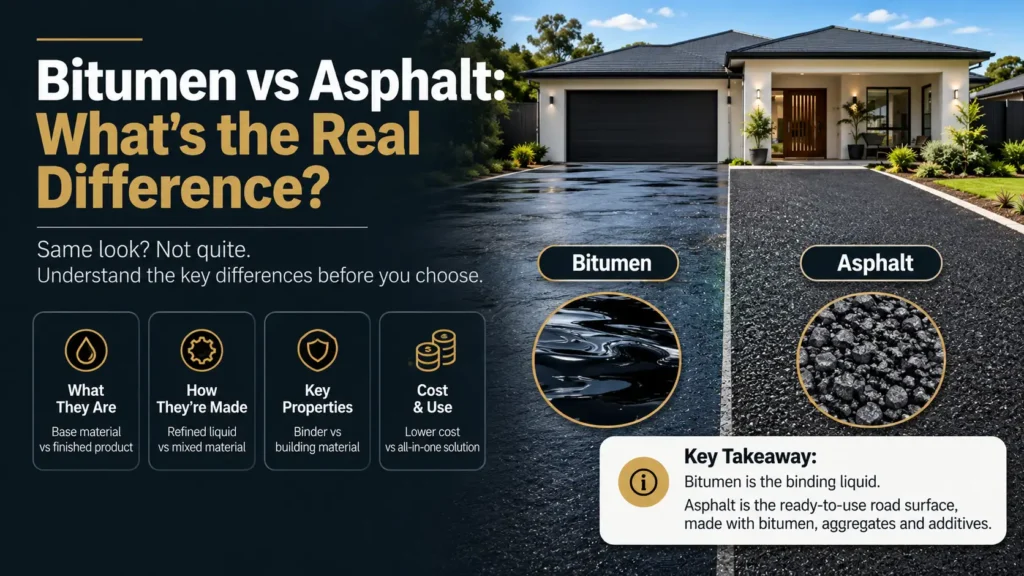
Bitumen is one ingredient used to produce asphalt. Asphalt combines bitumen with aggregates to create a strong surface capable of supporting regular vehicle traffic.
Common Uses of Bitumen
Bitumen is mainly used where waterproofing and sealing are required.
Typical applications include:
-
Rural roads
-
Farm access roads
-
Surface resealing
-
Airport maintenance
-
Bridge waterproofing
-
Crack repairs
Because bitumen helps prevent water entering the pavement structure, it plays an important role in extending the lifespan of roads.
Common Uses of Asphalt
Asphalt is one of Australia’s most popular paving materials because it provides a smooth finish, long service life, and simple maintenance.
Residential Driveways
Homeowners often choose asphalt because it offers an attractive appearance, fast installation, and easy repairs. If you’re planning a new entrance for your property, our asphalt driveway services provide durable solutions designed for Perth’s climate.
Roads
Local councils, developers, and businesses commonly use asphalt for streets and access roads because it delivers a comfortable driving surface and excellent durability. Our asphalt road construction services are suitable for residential, commercial, and civil infrastructure projects.
Commercial Car Parks
Shopping centres, schools, office buildings, and industrial facilities frequently choose asphalt because it handles daily traffic while remaining cost-effective. Our asphalt car park construction services create durable parking areas built for long-term performance.
Which Material Is More Durable?
Both bitumen and asphalt can provide many years of reliable service when installed correctly.
Asphalt is generally more durable because it combines aggregates with bitumen to create a complete structural pavement. It is flexible enough to accommodate minor ground movement and can often be repaired without replacing the entire surface.
Bitumen spray seal also performs well, particularly on roads with lower traffic volumes. Regular maintenance and resealing help maximise its lifespan.
The durability of either surface depends on:
-
Proper site preparation
-
Strong road base
-
Effective drainage
-
Traffic levels
-
Routine maintenance
Which Option Costs Less?
For many projects, bitumen spray seal has a lower initial installation cost than asphalt. This makes it a suitable option for rural roads, farms, and long access roads where budget is a major consideration.
Asphalt generally requires a higher upfront investment because it contains a complete paving mix and requires specialised equipment. However, its smooth finish, durability, and lower maintenance often provide excellent long-term value for residential and commercial properties.
Is Recycled Asphalt Worth Considering?
Many paving projects now include recycled materials to reduce waste and improve sustainability.
Using recycled asphalt products can reduce the demand for new raw materials while still providing dependable performance for roads, driveways, and commercial paving applications.
Common Myths About Bitumen and Asphalt
Myth 1: They’re the Same Material
They are closely connected, but bitumen is the binder, while asphalt is the finished paving material.
Myth 2: Asphalt Is Only Used on Highways
False. Asphalt is commonly installed on driveways, pathways, car parks, schools, industrial sites, and business premises.
Myth 3: Asphalt Cannot Be Repaired
False. Cracks, potholes, and worn sections can often be repaired or resurfaced, helping extend the pavement’s service life.
Why Professional Installation Matters
The quality of installation plays a major role in how long a pavement lasts. Proper excavation, drainage, base preparation, and compaction are all essential for achieving a durable surface.
Whether you’re upgrading an existing pavement or starting a new project, our asphalt paving services provide complete solutions for residential, commercial, and industrial developments throughout Western Australia.
Working with an experienced asphalt contractor in Perth also helps ensure your pavement is designed for local traffic conditions and weather, giving you a surface that performs well for years to come.
Frequently Asked Questions
Is bitumen the same as asphalt?
No. Bitumen is the binding material used to make asphalt.
Which is better for residential driveways?
Asphalt is generally the preferred choice because it offers a smooth finish, simple maintenance, and long-lasting performance.
Is spray seal cheaper than asphalt?
In many cases, yes. Spray seal usually has a lower upfront installation cost for large rural projects.
Can asphalt be recycled?
Yes. Asphalt is one of the most recycled paving materials used in road construction.
Which material lasts longer?
Both offer excellent durability when installed correctly and maintained regularly. The lifespan depends on the quality of construction, traffic levels, and ongoing maintenance.
Final Thoughts
Although bitumen and asphalt are often mentioned together, they perform different roles in pavement construction. Bitumen acts as the binding material that holds aggregates together, while asphalt is the finished product used for roads, driveways, car parks, and commercial developments.
Choosing the right material depends on your project’s size, traffic requirements, budget, and long-term maintenance goals. By understanding how each material works, you can make an informed decision and invest in a paving solution that delivers reliable performance for years to come.